Since his beginnings at the newspaper Pueblo
in 1964 to his final work for EL PAÍS, where he published
uninterruptedly for the last 23 years, Forges affectionately and
ironically tracked Spanish society as it evolved from a dictatorship
under Francisco Franco to a hyper-technological modern state.
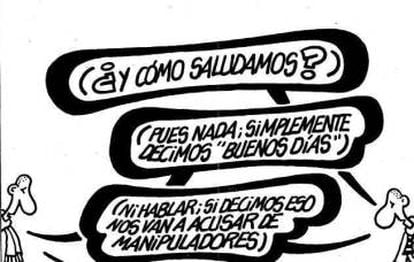
The first cartoon published by Forges in EL PAÍS in 1995.
Forges
was born in Madrid on January 17, 1942. He was the second child in a
family of nine. At 14 years of age, he began to work at the state
broadcaster Televisión Española, where he started to draw. In 1964 he
published his first cartoon in Pueblo, followed by
collaborations with other newspapers. As Spain transitioned to
democracy, Forges also published cartoons in the country’s first satirical magazines.
On
June 25, 1995, Forges began drawing cartoons for the Opinion section of
EL PAÍS – a relationship he maintained until his death. His first
cartoon for the newspaper captured a conversation between two blasillos,
a character invented by Forges in homage to the country’s rural
community. It goes: “And how should we greet one another?” “We simply
say good day.” “Better not, they are going to accuse us of being
manipulators.” “Heavens, it’s true.”
Other comic strips
made fun of Spain’s passion for soccer, criticized nostalgia for the
past, and also took a stand on key social issues. Forges opposed the war in Iraq, defended women’s rights and created a campaign to ensure readers would not forget about the victims of the Haiti earthquake.
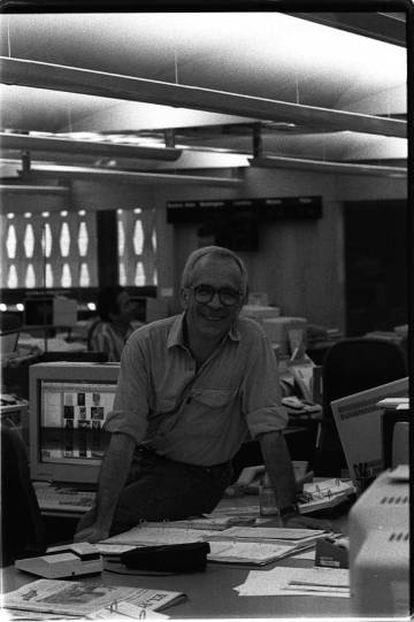
Forges at the EL PAÍS newsroom in 1995.Raúl cancio
As
well as his cartoons, Forges also authored a series of books, directed
two films and wrote many scripts for television comedy programs. He
received numerous awards and distinctions for his work, among them the
Gold Medal of Merit in Work, the National Journalism Prize and the
Quevedos Latin American Prize for Graphic Humor. In 2014, a collection
of stamps was printed with his cartoons.
In his later
years, Forges enthusiastically embraced the internet and social media,
becoming the EL PAÍS collaborator with the highest number of Twitter
followers – more than half a million. In an interview, Forges described
his relationship with technology.
“All generations
believe we are so important for the intelligence of humanity. We also
tend to see the world from our point of view. I don’t feel like an
immigrant to a new culture, I am part of this new culture. I am not
afraid of new technology and I believe it is one of the advantages we
have in our search for freedom.”
Condolences
Spain’s leading political figures and personalities have paid tribute to the iconic artist. The Spanish royal family
thanked Forges for his lessons and lamented that “Spaniards have been
left orphans of a bastion of wisdom and defender of democratic values,”
in a message on the official Twitter account.
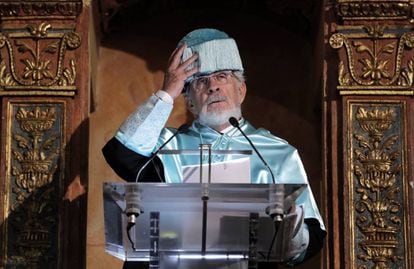
Forges receiving an honorary doctorate from Alcalá University in 2016.Carlos Rosillo
Prime
Minister Mariano Rajoy also expressed his condolences on Twitter,
describing Forges as a “landmark cartoonist in the Spanish press.”
Pedro
Sánchez, the leader of the Spanish Socialist party (PSOE), tweeted: “We
have lost a comic genius but also a good and committed man,” while
Albert Rivera of Ciudadanos described Forges as the “painter of our
history.” Podemos leader Pablo Iglesias wrote “I cannot conceive of
Spain without its cartoonists. We have been left without a cartoonist
equal to none in Spain’s political and social history.”

Nessun commento:
Posta un commento